
Insulation pays off – for the climate, comfort, and costs
The Energy Talk on campus focused on the practical application and potential of modern thermal insulation
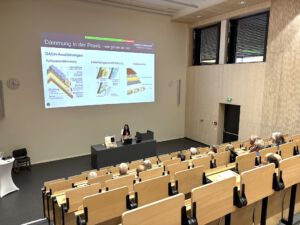
On November 5, the campus hosted an Energy Talk on the topic of “Insulation – Practice and Potential.” After a welcome address by campus director Prof. Dr.-Ing. Haresh Vaidya, Regina Weger, research assistant and energy consultant at the campus, took the floor. Among other things, she is responsible for the BMFTR’s DATIpilot project HoTMuS. In her keynote speech, she highlighted the importance of energy insulation in existing buildings – a topic that is more relevant than ever in view of rising energy prices and ambitious climate targets.
The majority of residential buildings in Germany date from the post-war period. These buildings often no longer meet today’s energy standards, which means there is enormous potential for savings. “A house from the 1960s can save up to 30 to 50 percent in heating costs through professional insulation of the roof and walls,” explained the speaker. This is not only about thermal insulation in winter – insulation also helps to keep the house cool in summer and create a pleasant indoor climate. In addition, mold growth is prevented and an important contribution is made to climate protection.
The presentation highlighted typical weak points that can be easily identified using thermographic images. The research assistant then presented various insulation materials and their properties—from classic insulation materials to ecological alternatives. The question of which material is suitable for which parts of the building was also explained in a practical manner: insulation from the outside or inside, roof and ceiling insulation, composite thermal insulation systems (ETICS) and rear-ventilated facades, or insulation of the basement ceiling for greater living comfort.
It is particularly important to plan insulation measures carefully and to seek professional advice at an early stage. Reference was also made to websites that offer a good overview of insulation materials and funding opportunities. In addition to insulation itself, proper ventilation, hydraulic balancing of the heating system, and an up-to-date energy performance certificate are also key components of an energy-efficient home. The rule of thumb is: “Insulate first, then replace the heating system.”
Ecological aspects were also highlighted: good insulation not only saves money, but also improves the ecological balance, increases living comfort, and contributes to maintaining the value of the property. In practice, this means: taking stock of the existing situation, implementing measures step by step, taking advantage of subsidies, and carrying out all work professionally.
Following the presentation, the numerous participants—both on site and online—took the opportunity to ask questions. Topics discussed included the cost per square meter, possible designs, and the importance of controlled residential ventilation.
The evening impressively demonstrated the enormous potential of energy-efficient renovations—both for climate protection and personal well-being.